Wood Shake
Wood shake roofing in Fort Worth and the DFW area
Wood shake has a look that nothing else fully replicates — natural, textured, and with the kind of character that actually improves as the roof ages. It's rare in DFW, and there are real reasons for that. Fire code, HOA rules, insurance availability, and insect pressure all make it a harder sell here than in other parts of the country. That doesn't mean it's off the table, but it does mean that if you're considering wood shake, you need to go in with a clear picture of what the tradeoffs are.
What it is
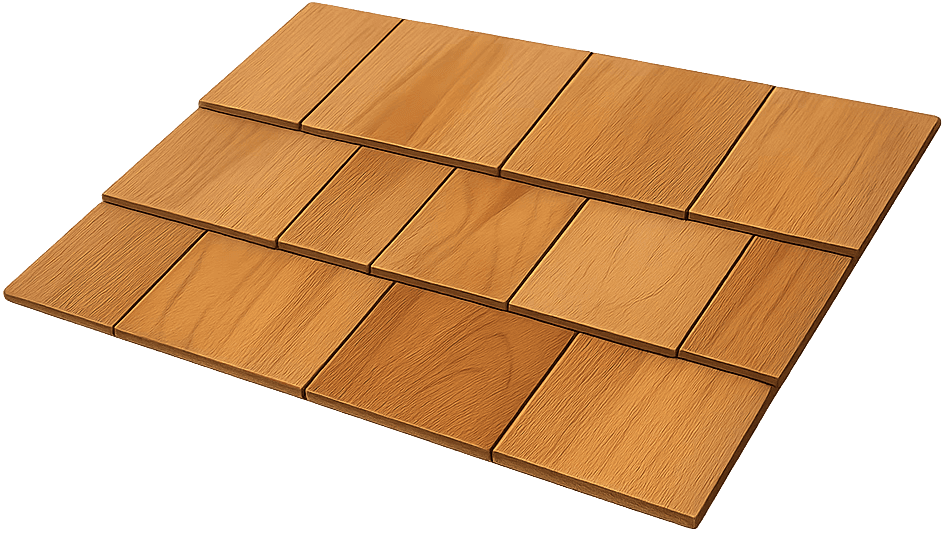
Wood shake is real cedar (occasionally redwood or pine) split or sawn into individual shingles and installed in overlapping courses. "Shakes" are hand-split and have a rougher, more textured face. "Shingles" are sawn on both sides and have a smoother, more uniform look. Both are real wood, both weather naturally, and both have the same general set of pros and cons.
Best for
A short list.
Custom homes in rural or semi-rural areas without HOA restrictions
Architectural styles where wood shake is original to the design (craftsman, historic, lodge, some ranch homes)
Homeowners who want a truly natural material and are willing to maintain it
Homes outside fire-restricted zones
Key features
What wood shake gets right.
Distinctive natural appearance that develops character over time
Good insulation value compared to thinner roofing materials
Fully natural, renewable material
Can be refinished and maintained over time rather than replaced outright
Material composition
Simple and natural.
Western red cedar (most common)
Some manufacturers offer alaskan yellow cedar or redwood
Pressure-treated options available for fire and decay resistance
No petroleum, plastics, or synthetic coatings in the base material
Estimated lifespan
Heavily dependent on maintenance and local climate.
Wood shake in DFW: 20-30 years with regular maintenance
Without maintenance, lifespan drops significantly — often closer to 15-20
Shingles (sawn) tend to last a bit longer than split shakes in the same conditions
DFW heat and occasional humidity swings are harder on wood than drier western climates
Cost range
Higher than asphalt, lower than metal or tile.
Installed cost: $6.00 – $10.00 per sq. ft.
Pressure-treated (fire/decay-resistant) options add cost
Maintenance cost over lifetime is meaningfully higher than other materials — factor this in
Maintenance needs
This is where wood shake separates itself from every other residential material.
Annual inspection for moss, mildew, and curling/cracking shakes
Cleaning and treatment every 3-5 years (moss prevention, UV protection)
Replacing damaged or cracked individual shakes as needed
Keeping the roof clear of overhanging branches and debris
If you're the type of homeowner who doesn't want to think about the roof, wood shake is not the right choice
Visual style
Genuinely unique in the residential category.
Hand-split shakes with heavy texture and irregular edges
Sawn shingles with uniform, tailored look
Natural warm tones that silver with age
Fits certain architectural styles (craftsman, lodge, tudor, historic) better than anything else
Warranty options
Shorter than most other materials.
Manufacturer warranties: typically 20-30 years
Treatment and fire-retardant warranties: separate, often shorter
Workmanship warranty through CWT: 15 years
Installation time
Labor-intensive and slower than most materials.
Most residential installs: 4-7 days
Requires experienced installers — inconsistent spacing or bad flashing leads to leaks
Weather-dependent, same as all other materials
Environmental impact
Mixed picture.
Natural, renewable material
Biodegradable at end of life
Harvesting cedar does have forestry impact
Shorter lifespan means more frequent replacement compared to metal, synthetic, or tile
Fire and weather ratings
This is the honest conversation.
Untreated wood shake: Class C fire rating at best, and many municipalities restrict or prohibit it
Pressure-treated: Can achieve Class A or Class B with fire retardant treatment, but the treatment wears off over time and typically needs to be reapplied
Wind resistance: reasonable with proper installation
Hail: vulnerable compared to Class 4 asphalt, metal, or synthetic — cracked shakes are common after major storms
Available colors and styles
Natural material, limited color options.
Colors: Natural cedar (warm brown to silver-gray as it ages), sometimes stained for a deeper initial color
Profiles: Hand-split shakes (rough, dimensional), tapersawn shakes (medium texture), sawn shingles (smooth, uniform)
Grades: Number 1 (premium), Number 2, Number 3 — we only install Number 1
What you need to know before you commit
Wood shake is harder to pull off in DFW than in most places, and we want to be straight with you about why.
HOA restrictions: Most modern DFW subdivisions prohibit wood shake outright. Before even getting quotes, check your HOA covenants.
Fire code: The city of Fort Worth and many surrounding municipalities restrict or prohibit untreated wood roofing in certain zones. Treated shake is allowed in more places, but it's worth confirming with the local building department before committing.
Insurance: Some carriers will not write homeowner's insurance on wood shake roofs, and most of the ones that will charge a meaningful premium. We recommend calling your insurance agent before committing so you know exactly what the premium will look like.
Insect and rot pressure: Wood shake is more vulnerable to termites, carpenter ants, and fungal decay than synthetic or metal. Treatment helps, but it's not a free pass.
An honest alternative: If you love the look of wood shake, synthetic shake is worth a serious look. It gets you the same appearance without the fire, insurance, HOA, or maintenance issues. We'll install either one, but we want to make sure you know both options exist before committing.
If wood shake is the right choice for your home, it's a beautiful roof. It's just not the right choice for most DFW homes, and we'd rather tell you that upfront than let you find out the hard way.
Section Tag