Clay Tile
Clay tile roofing in Fort Worth and the DFW area
Clay tile is one of the oldest roofing materials still in use, and there's a reason: a clay tile roof can easily outlast the house it's on. In DFW, clay tile shows up most often on Spanish-revival, Mediterranean, and custom Mission-style homes, and when it's the right match for the architecture, nothing else really comes close. It's also one of the more specialized installs we do, and there are a few things worth understanding before committing to it.
What it is
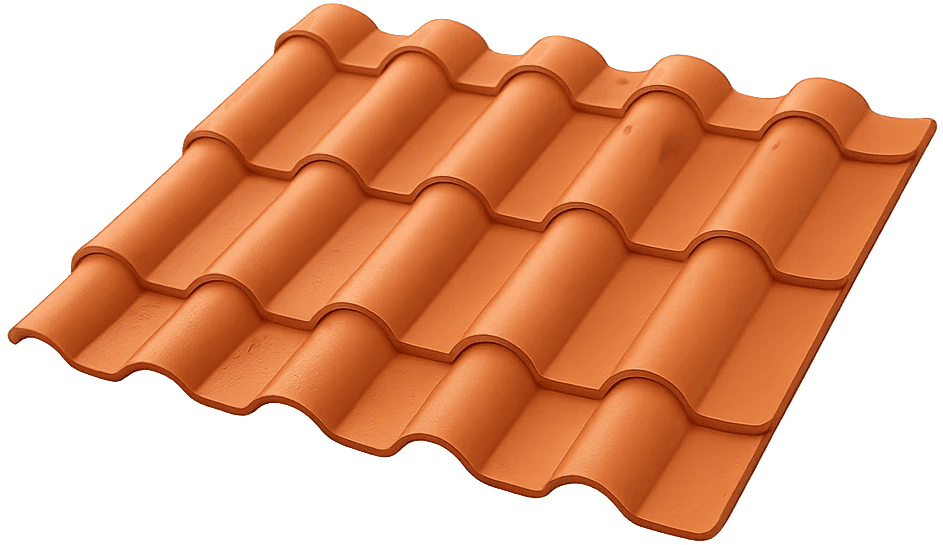
Clay tile roofing is made from natural clay shaped into interlocking tiles, then fired in a kiln until it hardens into a dense, ceramic-like material. The result is a non-combustible, UV-stable, dimensionally stable tile that can last 50+ years on the roof and still look good.
Most clay tile comes in either barrel (S-curve, Spanish style), flat (more modern), or interlocking profiles.
Best for
Clay tile isn't a universal choice — it's a specific one, and it's the right call for specific homes.
Spanish, Mediterranean, Mission, and Tuscan architectural styles
Custom homes where the roof is a major design feature
Homeowners planning to stay long-term (cost per year is low, but upfront cost is high)
Homes with framing rated for the weight (or with reinforcement budget)
Key features
A few reasons clay tile has been on roofs for thousands of years.
Exceptional lifespan — 50+ years, sometimes 100+
Excellent heat resistance for Texas summers
Non-combustible (Class A fire rating)
Insect-proof, rot-proof, and resistant to most types of decay
Distinctive look that adds serious curb appeal to the right home
Material composition
Simple and natural.
Kiln-fired natural clay
No petroleum products, coatings, or synthetic materials
Interlocking design for wind resistance and water shedding
Estimated lifespan
The tile itself lasts effectively forever. The underlayment does not.
Clay tile lifespan: 50+ years, often 75-100
Underlayment beneath the tile: typically 20-30 years, will need replacement at least once during the roof's life
Individual tiles may need replacement after hail events
Cost range
One of the more expensive materials we install, but the cost-per-year is competitive with metal over the long haul.
Installed cost: $10.00 – $18.00 per sq. ft.
Structural reinforcement (if needed): additional cost, quoted separately
Underlayment replacement mid-life: plan for this as a scheduled maintenance cost
Maintenance needs
Mostly low-maintenance, but with a few quirks.
Walking on clay tile is risky — it cracks under weight, so most inspections have to be done carefully or from a ladder
Individual tile replacement after hail or impact damage
Periodic underlayment checks, especially past the 20-year mark
Clearing debris from tile valleys and drainage channels
Visual style
One of the most distinctive looks in residential roofing.
Traditional S-curve barrel tile (classic Spanish)
Flat or low-profile tile (modern, contemporary)
Two-piece mission tile for authentic historical styling
Available in natural terracotta, tan, brown, charcoal, and some custom glazed colors
Warranty options
Solid warranty coverage, but terms vary by manufacturer.
Tile warranties: 50 years to lifetime (depending on manufacturer)
Color/finish warranties: typically 30-50 years
Workmanship warranty through CWT: 15 years
Installation time
Slower and more labor-intensive than asphalt.
Most residential installs: 5-10 days
Requires specialized techniques and experienced installers
Weight and fragility slow down the install process
Environmental impact
One of the greener options in roofing.
Made from natural, abundant materials
Long lifespan means less frequent replacement
Fully recyclable (can be crushed and reused in landscaping or construction)
No petroleum, no off-gassing, no disposal concerns
Fire and weather ratings
Exceptional across the board, with one real weakness.
Class A fire rating (highest)
Wind resistance up to 150 mph with proper installation
Hail vulnerability: This is the real tradeoff in DFW. Clay tiles can crack under direct hail impact, especially older or thinner tiles. Individual tile replacement is possible after storms, but it does mean occasional maintenance calls after hail events. Newer interlocking designs and thicker tiles perform better.
Available colors and styles
Natural color palette with some designer options.
Colors: Natural terracotta, tan, brown, red-brown, charcoal, and glazed color options (less common, more expensive)
Profiles: S-curve (barrel), flat, low-profile, two-piece mission
Finishes: Unglazed (natural matte) or glazed (smoother, more color-stable)
One thing worth knowing before you commit
Clay tile is heavy — typically 800-1,100 lbs per square (100 sq. ft.), which is 3-4x the weight of asphalt shingles. Most modern DFW homes are framed for asphalt. Before installing clay tile on a home that currently has asphalt, a structural assessment is important to confirm the framing can handle the load. In some cases, reinforcement is needed, and that's a real cost to budget for.
If your home was originally built with a tile roof, none of this applies — the framing is already rated for it. If you're switching from asphalt, get an honest answer before you fall in love with the look.
Section Tag