Slate Roofing
Slate roofing in Fort Worth and the DFW area
Slate is the longest-lasting roofing material in the world. A properly installed slate roof can outlast the house by a hundred years, and there are slate roofs in Europe still in service after four and five centuries. It's also the most expensive common residential option, and it's rare in DFW for two specific reasons: weight and cost. That said, for the right home — usually a high-end custom or historic property — slate is the roof you install once and never think about again. If you're considering it, there are a few things worth understanding before you commit.
What it is
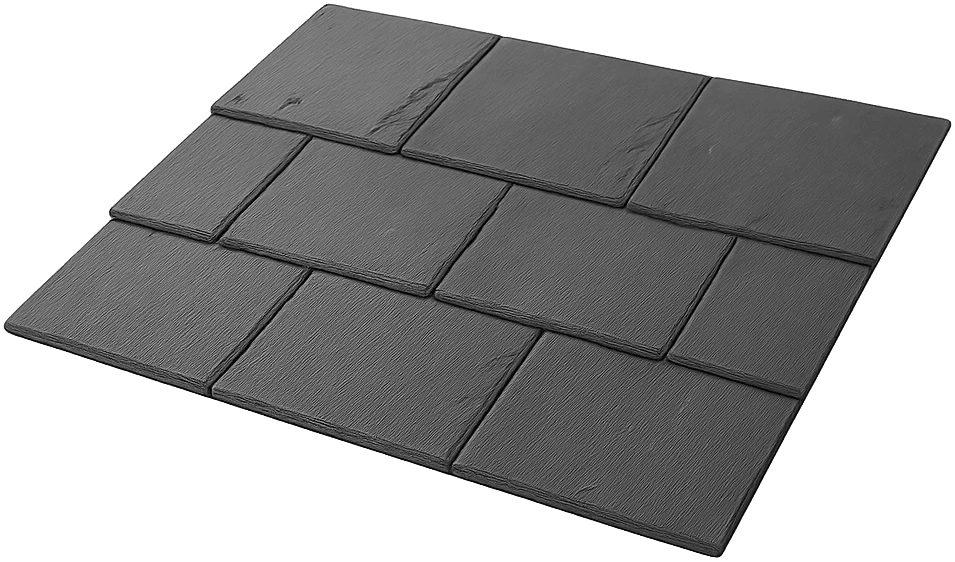
Slate roofing is made from natural stone — real slate quarried from the ground, split along its natural grain, and cut into roofing tiles. It's a dense, non-porous, completely non-combustible material with a natural stone texture that nothing else can quite duplicate. There are two main categories:
Natural slate: Real quarried stone. Premium, heavy, and extremely long-lasting.
Synthetic slate: Engineered polymer products that mimic the look. Covered on the Synthetic Roofing page — worth considering if the real thing is out of reach.
Best for
A narrow set of homes.
High-end custom homes where budget isn't the driving factor
Historic homes where slate is original to the architecture
Homeowners who want a roof that genuinely lasts a lifetime
Homes with framing rated for heavy roofing (or with reinforcement budget)
Key features
The reasons slate has been used for centuries.
Lifespan measured in centuries, not decades
Completely non-combustible (Class A fire rating)
Impervious to insects, rot, and UV degradation
Natural stone appearance with depth and variation that synthetic can only approximate
Effectively maintenance-free for most of its life
Increases home value in ways most roofing materials don't
Material composition
Pure natural stone.
Quarried slate (most premium from Vermont, New York, Virginia, Pennsylvania, and imported from Spain/Wales)
No coatings, no treatments, no synthetic additives
Natural variation in color and thickness from tile to tile
Estimated lifespan
The longest of any roofing material.
Natural slate: 75-150+ years
Many historic slate roofs exceed 200 years with basic maintenance
Underlayment and copper flashings will need replacement at least once during the roof's life — plan for this
Individual slate tiles may need replacement after severe hail events
Cost range
The most expensive common residential roofing option.
Installed cost: $15.00 – $30.00+ per sq. ft.
Structural reinforcement (if needed): substantial additional cost, quoted separately
Copper flashings, ridge caps, and valleys: premium but necessary for long-term performance
The cost-per-year is actually competitive with asphalt over a century, but the upfront check is steep
Maintenance needs
Very low, but with specific quirks.
Walking on slate breaks it — all inspections must be done with care by experienced roofers
Replacing the occasional broken tile after hail events
Checking copper flashings and valleys every 10-15 years
Underlayment replacement somewhere in the 50-70 year range, if the rest of the roof lasts that long
Visual style
One of the most distinctive looks in residential roofing.
Flat, uniform courses in graduated sizes
Rich natural colors from gray to green to purple to black
Subtle variation between tiles that gives the whole roof a hand-crafted quality
Best suited to tudor, gothic, french, colonial, and historic architectural styles
Warranty options
Warranties are almost beside the point — the material outlasts the warranty by decades.
Quarry warranties: typically 50-100 years on natural slate
Installation workmanship is the critical factor, not the tile warranty
Workmanship warranty through CWT: 15 years
Installation time
The longest install of any common material.
Most residential installs: 7-14 days or more
Requires highly specialized installers — slate roofing is a craft, not a trade
Custom work, copper flashing, and valley details add time
Environmental impact
Genuinely one of the greenest options in roofing.
Natural, non-petroleum, non-synthetic material
Can be reused and reinstalled (salvaged slate is a real market)
Century-plus lifespan means minimal replacement waste
Quarrying does have its own environmental footprint, but the long life offsets most of it
Fire and weather ratings
Top-tier across the board.
Class A fire rating (naturally non-combustible)
Wind resistance up to 170+ mph on properly installed systems
Hail: can crack under direct impact from larger hail, but individual tile replacement is straightforward
Impact resistance varies by slate source and thickness
Available colors and styles
Natural colors from the stone itself.
Colors: Black, gray, blue-gray, green, purple, red, weathered mottled
Thickness: Standard (3/16"-1/4"), heavy (1/4"-3/8"), architectural (varied thickness for visual depth)
Patterns: Uniform, graduated, random-width, diamond, and other custom patterns
Sources: Vermont, New York, Virginia, Pennsylvania, Spain, Wales — each has slightly different characteristics
What you need to know before you commit
Slate is the right choice for a small number of DFW homes, and we want to be straight about the tradeoffs.
Weight: Slate weighs 800-1,500+ lbs per square — in some cases more than 4x the weight of asphalt. Very few DFW homes are framed for slate. If your home wasn't originally built with a slate or tile roof, a structural assessment is a mandatory first step, and reinforcement is almost always needed. This can be a substantial additional cost and needs to be in the budget from the start.
Cost: Installed cost plus potential reinforcement puts slate well above most other options. If budget is a concern, synthetic slate gets you 90% of the look at roughly a third of the cost, with no structural reinforcement needed.
Finding the right installer matters more than with any other material: Slate is a craft. A bad installer can ruin a roof that would have otherwise lasted a century. We have experience with slate installs, but we'll also be honest if we think your project would be better served by a specialist with a larger slate portfolio.
Hail is still a factor: Slate is durable but not invulnerable. Expect to replace an occasional tile after major storms. That's a one-tile repair, not a whole-roof replacement, so the ongoing cost is manageable.
If slate is the right call for your home, nothing else matches it for lifespan, beauty, or long-term value. But it's not the right call for most DFW homes, and we'd rather have that conversation upfront than after the estimate.
Section Tag